Can a public domain nursery rhyme trigger a copyright claim on YouTube?
Yes. We recently received a YouTube copyright claim for the melody or lyrics of “Mary Had a Little Lamb”, even though we recorded it ourselves and it’s the historic nursery rhyme with both the melody and the lyrics in the public domain.
In this post we walk you through how we disputed the claim and got YouTube to release the claim automatically.
Key Takeaway
A public domain melody can still trigger an automated YouTube Content ID claim. When the claim specifically covers the melody or lyrics, you can dispute it by documenting the composition’s public domain status and confirming that you own or have permission to use the recording.
The Copyright Claim We Received
Recently we uploaded a video showcasing our royalty-free nursery rhymes music collection containing our own recording of Mary Had a Little Lamb.
Shortly after we’ve a copyright claim. The claim included the following details:
- Claimed content: Mary Had A Little Lamb – DNC.
- Content type: Melody or lyrics.
- Claimants: WCM SG/PRS and Warner Chappell.
- Channel impact: No copyright strike.
- Video impact: No visibility restriction, but the claim could affect monetization.
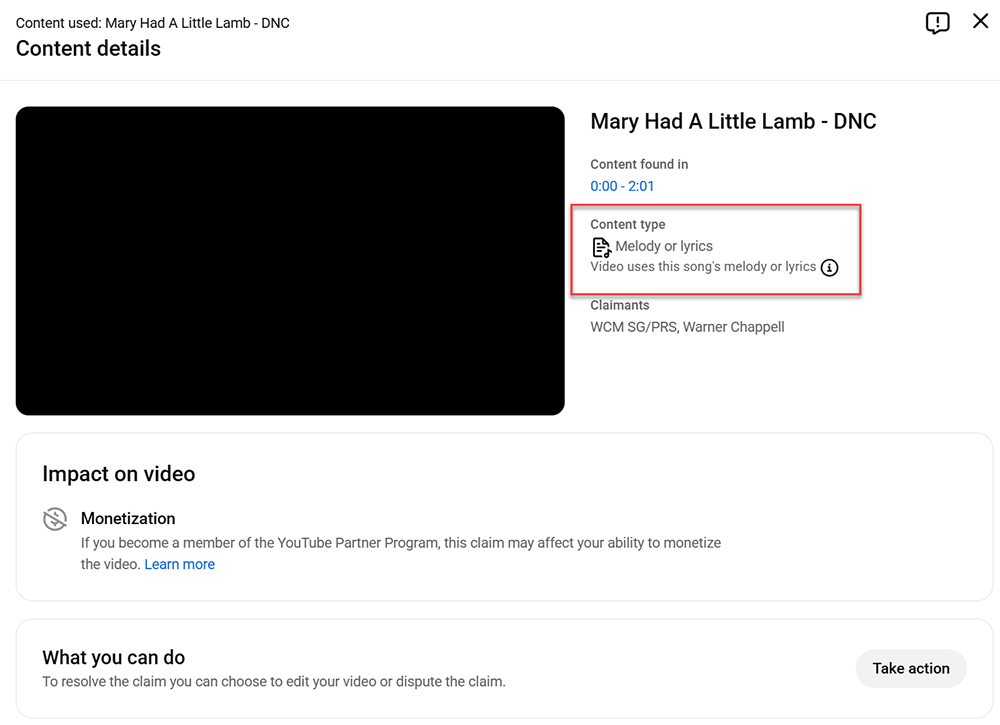
The most important detail was the content type.
This was a claim against the melody or lyrics, not a claim against a specific sound recording.
A melody or lyrics claim targets the underlying musical composition, such as the tune, words, or songwriting rights. An audio or sound recording claim targets a specific recorded performance. This distinction is important because a nursery rhyme’s melody and lyrics may be in the public domain, while a modern recording or arrangement of that nursery rhyme can still be copyrighted.
A public domain dispute is therefore more relevant to a melody or lyrics claim, while an audio claim usually requires proof that you created, licensed, or otherwise have permission to use the specific recording.
Why We Knew The Claim Was Invalid
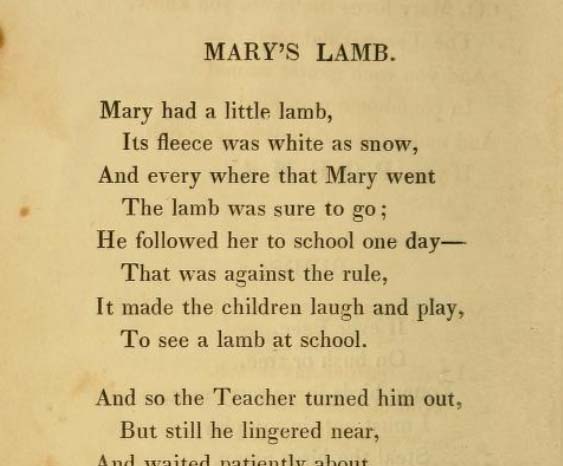
“Mary Had a Little Lamb” is a nineteenth-century American nursery rhyme. The lyrics appeared in Sarah Josepha Hale’s book Poems for Our Children, published in 1830.
You can review a digital copy of the original publication through the Internet Archive. Additional historical details are available on the Mary Had a Little Lamb reference page.
The composition and our recording are two separate pieces of intellectual property:
- The composition includes the underlying melody and lyrics. In this case, they are public domain.
- The recording is the specific recorded performance used in the video. We created and owned the recording used in our test.
This distinction matters. A modern recording of a public domain nursery rhyme can still be copyrighted. You cannot use someone else’s recording simply because the underlying melody is old.
However, YouTube clearly states that public domain compositions are ineligible as Content ID references. Since this claim specifically identified the melody or lyrics, the public domain status of the composition was directly relevant.
How We Disputed and Removed The Nursery Rhyme Claim
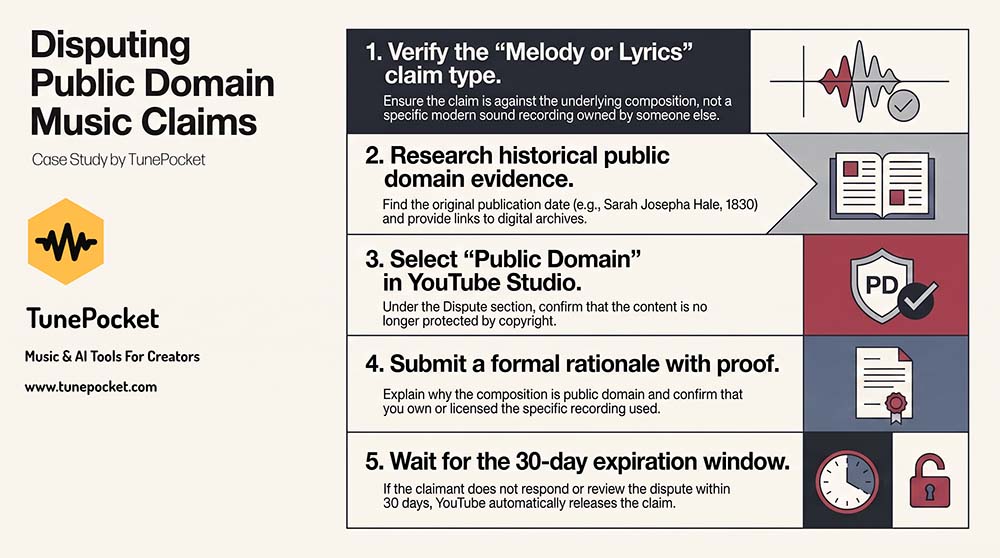
Here is the process we followed in YouTube Studio.
Step 1: Review The Claim Details
Open the affected video in YouTube Studio and review the copyright restriction.
Check exactly what is being claimed. Look for the claimant’s name, the matching section, and whether the content type says melody or lyrics, sound recording, or something else.
A public domain argument is most directly relevant when the claim is against the composition, melody, or lyrics.
Step 2: Select Take Action And Dispute
Click Take action and select Dispute.
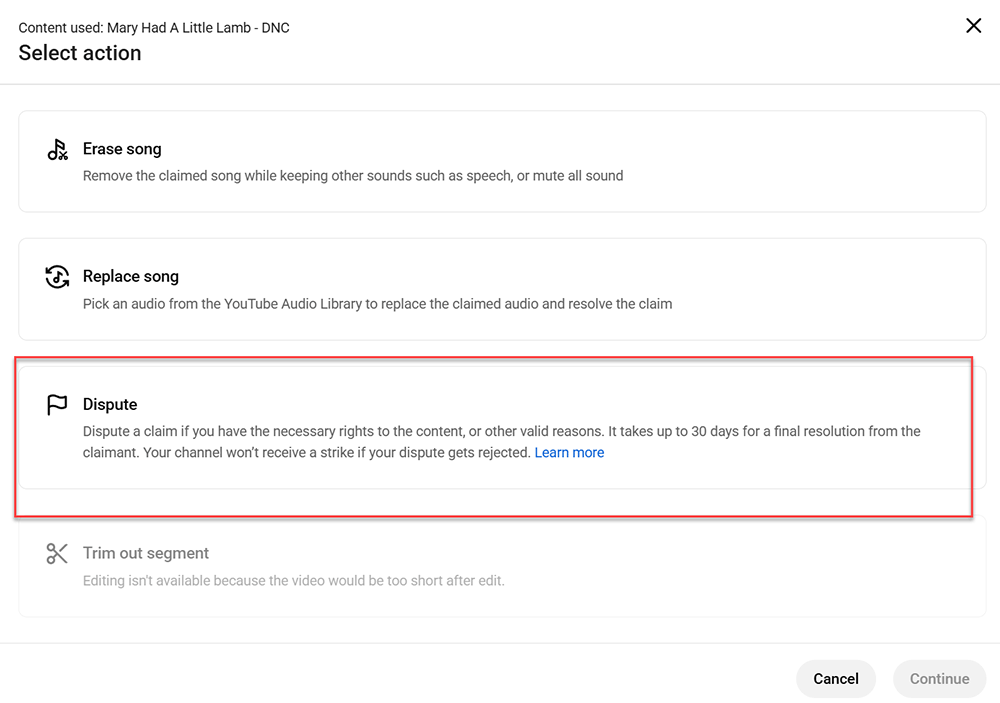
YouTube may also offer options to erase, replace, or mute the song. Those options edit the video instead of challenging the validity of the claim.
We selected Dispute because we believed the composition claim was incorrect.
Step 3: Choose Public Domain As The Reason
Select the public domain option and confirm that the claimed content is in the public domain or is not protected by copyright for another valid reason.
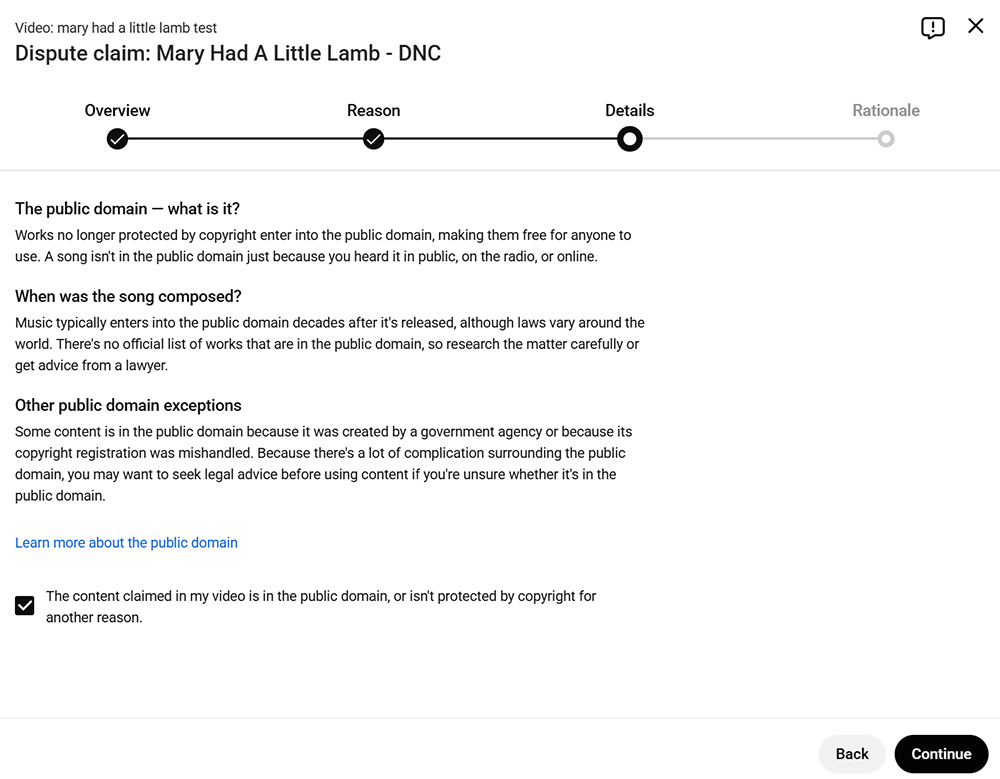
Only choose this reason when you have researched the specific composition and can support your statement.
Step 4: Provide A Clear Dispute Rationale
The rationale should explain three points:
- Why the composition is in the public domain.
- Where you found supporting historical information.
- Why the claimant does not control the recording used in your video.
Here is the dispute rationale we used, edited slightly for clarity:
I dispute this claim because the claimed melody and lyrics of Mary Had a Little Lamb, a historic nursery rhyme, are in the public domain.
The lyrics were first published in 1830, and the melody used is a nineteenth-century public domain tune. Historical information is available here:
https://archive.org/details/poemsforourchild00hale
https://en.wikipedia.org/wiki/Mary_Had_a_Little_Lamb
This video uses our own original recording and does not use a recording owned by the claimant.
YouTube’s Content ID guidelines state that public domain compositions are not eligible as Content ID references:
https://support.google.com/youtube/answer/2605065
Please release the claim and review the reference responsible for generating claims against this public domain composition.
Thank you.
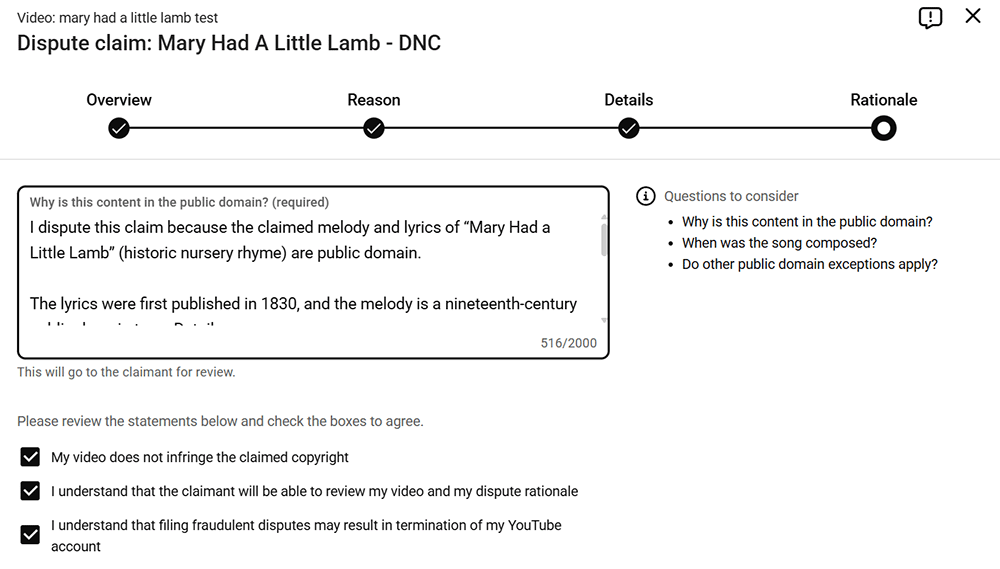
Do not copy this rationale without checking the facts in your own case. Replace “our own original recording” with an accurate explanation of how you obtained the recording and what rights or licence you have.
Step 5: Review The Statements And Submit
Review YouTube’s declarations carefully. Confirm the statements only when they are true, enter your electronic signature, and submit the dispute.
Once submitted, the dispute cannot normally be cancelled.
What Happened After We Submitted The Dispute
YouTube notified the claimant and placed the claim under review. The initial status showed that the dispute would expire in 30 days.
The claim did not affect the channel or restrict the video’s visibility while we waited. However, it could have affected the video’s ability to earn advertising revenue.
Near the end of the review period, the status showed that the dispute would expire in one day.
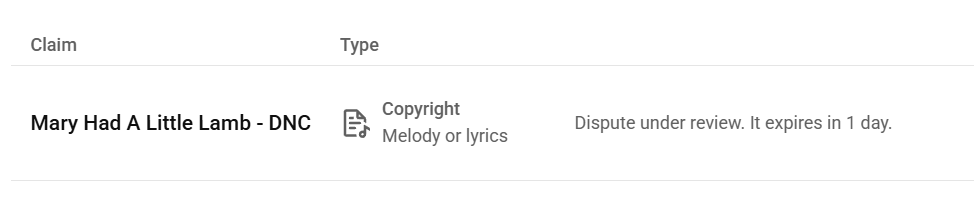
YouTube gives the claimant up to 30 days to take one of several actions:
- Release the claim.
- Reinstate the claim.
- Submit a copyright removal request.
- Allow the claim to expire by taking no action.
The Claim Was Automatically Released After 30 Days
In our case, the claimant did not review or respond to the dispute within the required 30-day period.
YouTube then sent a notification confirming that the copyright claim had been released.
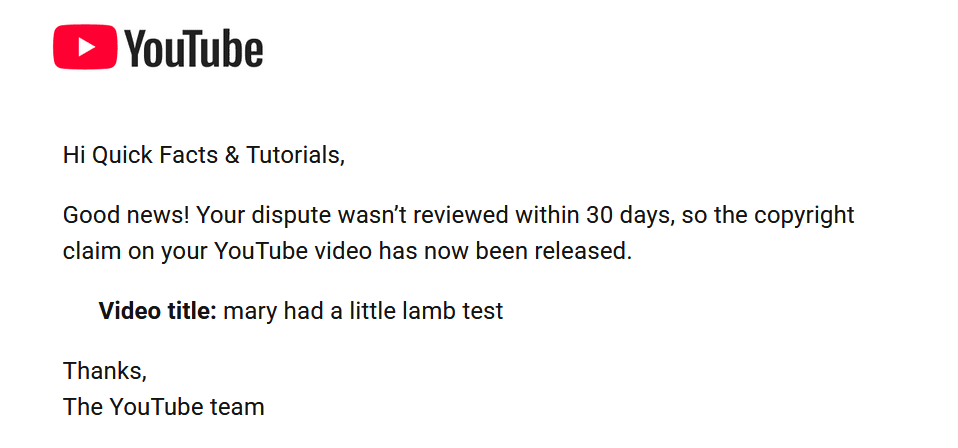
The video’s copyright status was cleared, and YouTube Studio no longer displayed any active claims.

This result does not necessarily mean the claimant formally agreed with our rationale. It means the claimant failed to respond before YouTube’s deadline, causing the claim to expire automatically.
When You Should Not Use This Dispute Reason
Do not automatically dispute every nursery rhyme claim as public domain.
A public domain composition does not give you permission to use every recording, arrangement, adaptation, or performance based on that composition.
Do not use this approach when:
- You copied the audio from another video, album, streaming service, or recording.
- The claim identifies a copyrighted sound recording that you do not own or licence.
- The song contains newer lyrics, arrangements, samples, or additions that remain protected.
- You cannot reliably verify the composition’s public domain status in the relevant country.
- You are unsure whether your licence permits the use shown in your video.
Only submit a dispute when you have a valid reason and can provide accurate supporting information.
Free Tools For YouTubers and Creators
Boost your channel | Save time | Grow faster

Frequently Asked Questions
Can Public Domain Nursery Rhymes Still Receive YouTube Claims?
Yes. YouTube Content ID can match a public domain melody against a reference submitted by a publisher, distributor, label, or other rights administrator. The automated match does not prove that the claim is valid.
Is A Melody Or Lyrics Claim The Same As A Sound Recording Claim?
No. A melody or lyrics claim generally concerns the underlying composition. A sound recording claim concerns a specific recorded performance. A public domain composition does not automatically make a modern recording public domain.
How Long Does A YouTube Content ID Dispute Take?
The claimant normally has up to 30 days to respond to an initial Content ID dispute. When the claimant does not respond within that period, the claim expires and is released.
Is A Content ID Claim A Copyright Strike?
No. A standard Content ID claim is not a copyright strike. Submitting an initial dispute does not automatically give your channel a strike. However, later stages of a copyright disagreement can involve additional risk, so dispute only when your reason is valid.
Can I Copy The Dispute Rationale From This Post?
You can use it as a starting point only when the facts match your situation. Verify the composition’s history, identify the exact type of claim, and explain whether you created or properly licensed the recording.
Final Takeaway
Our “Mary Had a Little Lamb” video received a claim against its melody or lyrics, even though the nursery rhyme composition is in the public domain.
We documented the song’s 1830 publication, explained that the video used our own recording, referenced YouTube’s Content ID eligibility rules, and submitted a public domain dispute.
The claimant did not respond within 30 days, so YouTube released the claim and cleared the video.
For more information, see our guides to using public domain music safely, resolving another public domain melody claim, and recognizing false YouTube copyright claims.
Free Infographic
This case study describes our experience and is provided for general information. It is not legal advice.
Download 14,000+ Royalty Free Music Tracks And Sound FX
Unlimited download | Lifetime license | Commercial use